We’re finally into December, and this infernal year is almost over! Based on the news I woke up to this morning, however, 2026 is probably going to be just as insane. But we’ll get to all that in a bit.
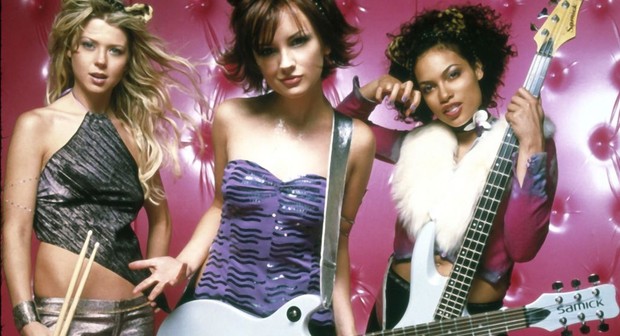
I had to watch 2001’s Josie and the Pussycats for a podcast, and I was kinda looking forward to it, since folks have been raving about it to me for the past 2 decades. And it was…fine. Honestly, I was disappointed. It did not live up to the hype, but I can understand why someone would have loved it at the time, and carried that with them. To be introduced to it now, however, it felt like a tonal mess. There are a few great moments where it almost approaches Austin Powers-level humor, but it’s a film that doesn’t know what it wants to be. For most of the film, you can tell it wants to be “subversive”, but it’s in an era when that wasn’t really that hard. All it did was rail against what’s popular, and go for the lowest hanging fruit, in terms of jokes. The incredible cast of Rachael Leigh Cook, Rosario Dawson, and Tara Reid are utterly wasted here – something that might have been forgivable in a film made within the past decade, but certainly not for a film released when 2/3 were at the very height of their fame. I’ve heard folks compare it to Spice World, which is a comparison that works for me, given I hated that movie, too. Both should have appealed to my pop-centric sensibilities, but both felt like lazy bores. Spice World is one of the only movies I’ve ordered in a hotel, and I couldn’t wait for it to end. In any other situation, I’d have changed the channel, but I had already charged to the room whatever the price was for Ramada Inn pay-per-view in 1997. Plus, I kinda hate Alan Cumming in everything he’s done.
It’s not all bad. Most folks have told me I’d want to see it merely for boyband Du Jour, and I’ll admit they were the high point of the film to me – sad, given they had so little screen time. Honestly, I found them more interesting than the Pussycats, as I already knew the Boyband Tropes, so there wasn’t much more I needed to pick up on. Meanwhile, we’re given almost no backstory on the Pussycasts themselves. Are they in high school or are they adults? How did they even get together? Are they even a good band? No one in Riverdale seems to be a fan, but it’s never really clear if that’s because the band doesn’t have what it takes OR if they really ARE good, but simply misunderstood by the “yokels” of Riverdale. And why do they talk about Riverdale like it’s some podunk, backwater town when it’s the home of America’s foremost teen gigolo?! The Pussycats never come off like the heroes of the movie, even compared to the “evil corporation” putting subliminal messages into pop songs. It was the “Yvan Eht Nioj” episode of The Simpsons all over again. End of the day, it’s not a bad movie, but it’s also not a great one, either.
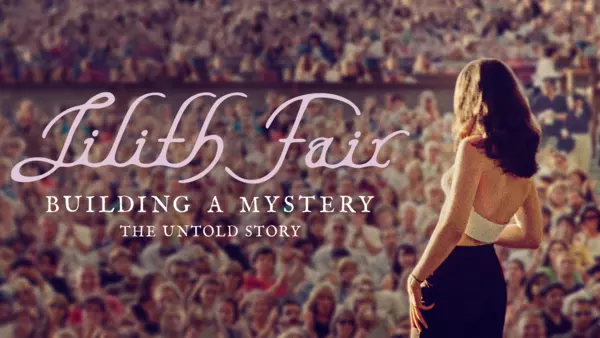
Sticking with the vibe of “rockin’ women’s empowerment”, I watched the Hulu documentary Lilith Fair: Building A Mystery. Inspired by Jessica Hopper’s oral history of Lilith Fair for Vanity Fair, the documentary looks back on the origins and influence of the 90’s female music festival. It’s a great documentary, but WAY too short. I’ve seen foolishness get 3-4 episodes, while this thing only got an hour and thirty-eight minutes. It does a decent job of covering the three-year span of the festival, but barely breaks the surface in terms of interviews and reactions. So, the story goes that Sarah McLachlan noticed that music festivals tended to be male-focused and male-dominated, and she wanted to see something like that, but with a bill that was predominantly female acts. After doing some test shows with Paula Cole in 1996, they mounted the first official Lilith Fair in 1997.
Now, even though McLachlan is considered “The Mother of Lilith Fair”, it becomes apparent pretty quickly that she didn’t really know what she was getting into. A lot of the lore of the festival involves her reacting to something as opposed to being proactive. For example, her thinking pretty much stopped at “Wouldn’t it be cool to see a festival of all-female artists?”, but she never seemed to understand what that would mean or how it would be seen. She would find out that it wasn’t that it couldn’t be done, but rather the industry didn’t want it to happen because it would undermine some of the gatekeeping and restrictions that had been imposed upon artists. For example, a lot of the participants said that they had originally seen each other as ‘The Competition”, as that’s the story their record labels had been telling them. The documentary makes one claim that I found hard to believe – simply because I was alive and listening to radio at the time – that radio stations never played back-to-back songs by female artists until Lilith Fair hit the scene. As someone who is certainly he grew up hearing Bonnie Tyler played after Aretha Franklin, that ain’t so. Now, if we’re being genre-specific, and only talking about Rock, then maybe they had something there. I would argue, however, that was an era of female bands, and not solo artists. You had Hole and Luscious Jackson. You had female-fronted bands, like The Cardigans and 10,000 Maniacs. But solo female rock artists weren’t getting a ton of radio play in general, so it’s hard to say there was a “rule” in place.
That thinking, however, is what was challenged by this documentary, as it showed our perception of a lot of things was different than how things were. For example, McLachlan and Cole talk about how they needed a coheadliner for the first tour, and how nervous they were to approach Tracy Chapman. They knew their fan bases, and who they could draw, but they simply idolized Chapman, and knew her draw would dwarf theirs. They needed someone like that on the bill. Now, in 1996, if you mentioned Tracy Chapman to me, I’d immediately – and only – think of “Give Me One Reason”. You could tell me, “Will, she won a Grammy”, and I’d say “Yeah, for ‘Give Me One Reason’.” I know a lot of folks love “Fast Car”, but I honestly didn’t even give that song the time of day til the Luke Combs cover, which thrust Chapman back into the spotlight. But I would never fathom a time when Tracy Chapman could outsell Sarah McLachlan, mainly due to genre and perceived audience. So, to have that stance challenged was surprising, to say the least.
The documentary also goes into how “Lilith Fair” began to be thrown around as a derogatory thing, as it become sort of synonymous with the idea of the waifish white singer-songwriter, putting a lot of those artists into a box. So, whereas a lot of artists benefited from the exposure, Lilith Fair began to have detrimental effects on the careers of artists like Cole and Liz Phair. Amid cries that the show was “too white”, McLachlan diversified the acts going forward, adding Erykah Badu to 1998’s show, while 1999 brought Queen Latifah, as well as R&B stars Monica and Mýa. Even Christina Aguilera got in on the action that year, drawing crowds to her small platform set up next to the Port-a-Potties. For all of the people that performed at one of the three festivals, I’d say there’s a glaring omission that needs some sort of explanation: Tori Amos.
If you had a gun to your head, and had to name some female artists you’d expect to see at Lilith Fair, you’d probably say Sarah McLachlan, Lisa Loeb, Jewel, and Tori Amos. And only three of those listed actually performed at the festival. Now, I was very familiar with a ton of these artists, since Dawson’s Creek had drilled Cole’s “I Don’t Wanna Wait” into all of our heads, while Jewel was ever-present on radio. I honestly didn’t discover McLachlan until 1997’s Surfacing, which gave us the singles “Adia” and ASPCA anthem “Angel”. I wouldn’t discover Amos until college. You see, the Lilith Fair setlist is pretty much the source of every late 90s/early 00s female a cappella group songpool. I discovered Amos, The Indigo Girls, and Joan Osborne’s songs NOT about God, all from 19 year-old blondes singing under an arch. I would, then, go seek out the originals on Napster (Yes, I’m dating myself here). So, to learn that Amos was NEVER at any of the three festivals is kinda jarring to me. It feels like the Mandela Effect. I did some research, and it feels I’m not alone here. To many, it was shocking that neither Amos nor Alanis performed, but I don’t really think of Alanis in that same crew, for reasons. Others have speculated everything from the prohibitive nature of having to ship her trademark Bösendorfer piano all around the country to the fact that the festivals tended to happen while she was dealing with some personal tragedies. Over the years, she has made remarks that suggest she supports what the festival was doing, and doesn’t seem to have anything bad to say about it.
As for “what the festival was doing”, let’s go back to where I said that McLachlan didn’t seem to know what she was getting into. When the documentary shares the personal testimonies shared by audience members, you begin to see what the show meant to these people – many of whom were from queer spaces. They talked about how the entire scene gave them the courage and support to live their truth. They basked in the exhibited “sisterhood”. The documentary was produced by Dan Levy, and even he says that the Lilith Fair was one of the first environments in which he truly felt safe, as a 12 year old closeted gay kid. And his experience wasn’t unique. While McLachlan was touched by all of this, it felt like this was an unintended by-product, as opposed to what the festival was originally meant to do. Brandi Carlisle talks about how she attended Lilith Fair as an out & proud 16 year old at The Gorge amphitheater in Washington, and just how much that experience sort of served as the backbone of her trajectory. That’s why it’s even more touching, near the end of the doc, to see her return to The Gorge, this time as a performer, where she invites McLachlan onstage to sing with her. It’s a powerful, yet brisk, documentary, and my biggest gripe is that I wish it had more room in which to breathe, and to share more insight on the lasting changes it made on the music industry.
Run The Numbers
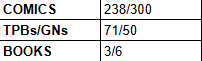
I read, but I didn’t read anything worth talking about. So, here’s an update scoreboard til next week.
Will Around The Web
First up, Remember That Show? returned, where we discussed mid 90s martial arts showcase WMAC Masters. It’s our penultimate episode of 2025, so make sure you’ve listened to them all before we head into the new year. Nothing will happen if you do or don’t, but I once had a boss tell me I had no sense of urgency, so there ya go!
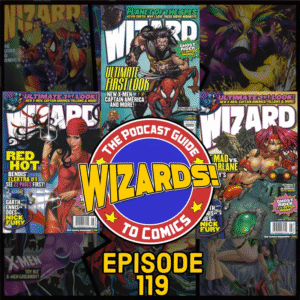
Then, on Wizards Podcast, Adam and I took a look at Wizard Magazine issue #119. This was an interesting time, as it covered Marvel’s upcoming mature readers imprint, MAX, as well as some designs for some Ultimate Marvel characters that had yet to debut on the page. Plus, the cover date was August 2001, so you know what’s around the corner, in terms of the-current events…
Things You Might Have Missed This Week
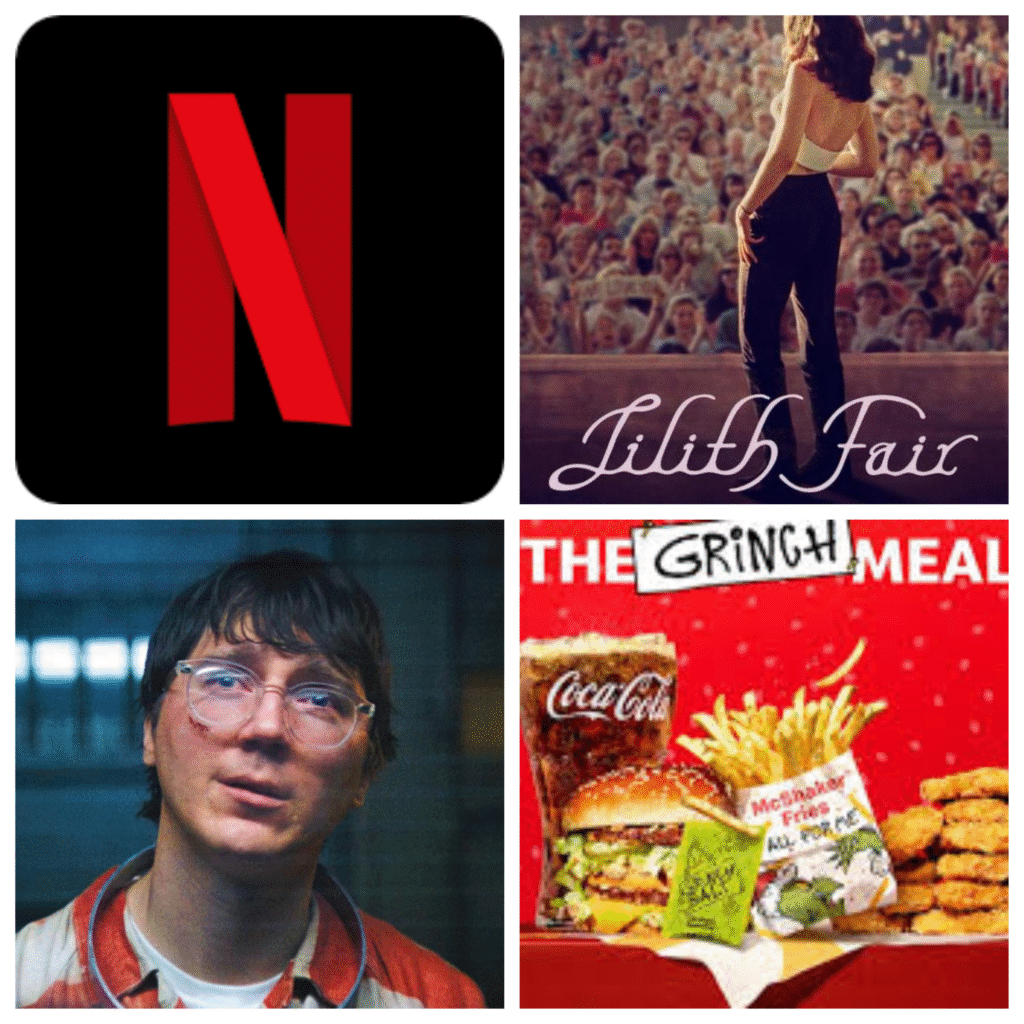
- Poor Paul Dano. Imagine Quentin Tarantino calling you “the weakest male actor in SAG” and “the limpest dick in the world”! Well, that’s what happened to Dano. He had to go home and look at his wife after that was said about him in a public forum! A bunch of folks have come out in defense of Dano, but what’s missing from the outcry is Tarantino also felt similarly about Owen Wilson and Matthew Lillard in the same interview.
- Amy Schumer showed off her recent drastic weight loss, revealing that she had been treated for Cushing’s syndrome, which had been the reason for her puffy face and weight gain. Cushing’s is when the body produces too much Cortisol over a long period of time.
- McDonald’s debuted their new, holiday-focused The Grinch Meal. It’s pretty much a standard Big Mac or 10-piece McNuggets meal, but there’s two additions. First up, you get Grinch Salt, which is a packet of dill pickle flavored seasoning. You dump the Grinch Salt and fries into the accompanying McShaker Bag to distribute the seasoning onto your fries. It’s…tart. It was good, but I also felt nauseous ten minutes later. Next up, you get a pair of collectible Grinch socks. I’ve got a full review over on TikTok.
- My buddy Mike over at Geek Mentality is back with Sitcom All Ye Faithful, where he does a *daily* podcast this month, covering a different Christmas-themed sitcom episode each day. It’s a great show, but I’m especially a fan of his theme song. Buckle up for 25 days of fun!
I gotta be honest with ya: Until late last night, The Grinch Meal was getting this spot. It wasn’t a big pop culture week, and I’m a sucker for McDonald’s promo meals. Then, just before going to bed, I saw that Netflix was projected to be the winner in the bidding war for Warner Bros. And then, once I woke up, the whole deal had been made official: Netflix will acquire the storied Warner Bros Discovery corporation for $82.7 billion dollars.
I’m still processing this, so I don’t have a “side” yet. On the one hand, I am over the moon that Paramount Skydance didn’t get it, as they had been considered the “sure bet” to get WBD. Plus, there was a report earlier this week that the company had advised Warner Bros on how a purchase by either Comcast or Netflix wouldn’t fly with the FTC. And, given that Paramount Skydance’s David Ellison is a close personal friend of Donald Trump (if anyone can claim to be “close” to that man), we know that it would only take a few Truth Social posts to guarantee that FTC denial. I’m still not convinced that won’t happen but, for now, Netflix emerged victorious.
Now, there is the argument that everything is owned by 3 companies, but it’s sort of been that way for a while. Disney owns everything. Coke owns all the beverages. Amazon owns The Washington Post. Mergers and acquisitions have been dominating for some time, but I think the difference is that we aren’t used to these Montgomery Burns figureheads that seem to be at the top of our current corporate behemoths. You can pretty much take your pick of a billionaire to hate. Don’t like weirdos? There’s Zuckerberg. Can’t stand bald guys? There’s Bezos. Got a problem with weaselly nerds? Bill Gates is right there. It’s a fun time to hate the rich. In terms of streaming, however, this was ALWAYS going to happen. These companies jumped into streaming without fully understanding it, nor having the inventory to support it. They’ve been chasing Netflix for over 15 years, but it had too much of a head start. Comcast hasn’t generated a single blockbuster original from Peacock. Paramount has struggled from the days of CBS All Access to its transition to Paramount+. The rights to the biggest Paramount hits were purchased by other streamers, while P+ hasn’t really been able to make a name for itself outside of being “The Home of Star Trek“. HBO Max originally had a lot of ambitious plans, most of which were almost immediately squashed by David Zaslav, and has been dealing with an identity crisis ever since. Meanwhile, Disney supposedly owns everything, yet all those toys still haven’t yielded a successful streaming model. The mergers, as well as straight up closing, of streaming models was pretty much the only road to survival, and even that’s not guaranteed. We never needed a Peacock, nor a Paramount+. However, in an industry where no one ever admits they were wrong, we look forward, and not back, and hope the next leap is the leap home.
And none of this even discusses Warner Bros Discovery itself. It’s a legendary brand that has been “uninspired” in recent years. Hell, not even recent. I’ve witnessed quite a few WB sales in my lifetime. Remember AOL-Time Warner? And then Warner Bros Discovery? And Lord only knows what Netflix is gonna call it. Plus, there’s no need for HBO Max anymore, but have fun paying double to watch The Sopranos on the New Netflix. None of this is going to be great for the consumer, but maybe it’ll help more folks keep their jobs than some other scenario? That’s really the main positive here. It’s all about surviving a decision that never had to be made in the first place. There’s not gonna be a “We were wrong about streaming”, but rather a “This deal is to better position ourselves in a changing marketplace.” Marketplaces are ALWAYS changing. If they weren’t, THAT would be a problem. So, don’t act like this was some unexpected outlier situation.
Finally, and selfishly, I’m worried about DC Comics. Netflix doesn’t understand comics. This was proven when they purchased Mark Millar’s “Millarverse”, which included all of his comic concepts that had yet to be adapted. So, no Kick-Ass or Wanted. But, hey, they got Jupiter’s Legacy out of it. Remember that? Nope, because no one watched it. That deal yielded no real success stories, and Millar is set to return to “The Big Two” soon, as his Netflix deal expires. Now, they could bring on folks who do understand comics, but Netflix is in a weird space, at the intersection of the entertainment and tech industries. So, not only are their moves boisterous and grandiose, but they also have to be “cutting edge” and “ahead of the curve”. So, instead of keeping the things that work (And, honestly, a lot has been working at DC lately, and it’s great to see), they’re more apt to throw out the baby with the bathwater, for a “bold, new approach”.
Anyway, this is all speculation at this point, and the deal hasn’t even been approved. I just know that it’s a bold new era. For a long time, streamers weren’t considered “legitimate”, as they didn’t align with the traditional studio model. That’s what these tech companies do. They upend tradition, and hope for the best. It’s interesting, though, in that WBD needs the cash, but Netflix is almost buying legitimacy here. For $87.2 billion, they just acquired 102 years of brands, inventory, and market recognition. As long as they understand that, and respect it, we’ll be fine. Still, there’s a chance that Space Jam 3 could be a Squid Game collab, so just be ready. In any case, this is a very big deal, which is why Netflix had the West Week Ever.